ICC Considers Cutting the 2027 ODI World Cup from 14 Teams to 12
Board members meeting in Edinburgh discussed trimming the 2027 men's ODI World Cup from 14 teams to 12, a move Associate administrators called a step backward for the global game.
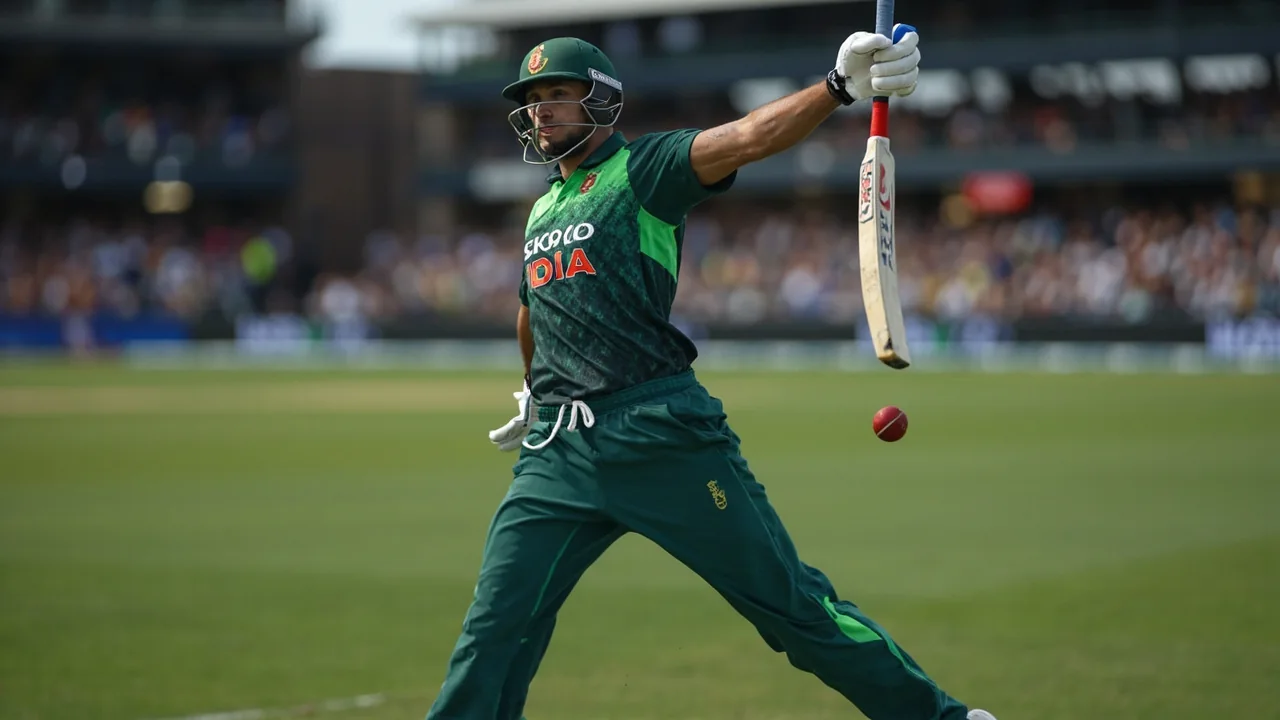
The International Cricket Council's board met in Edinburgh in mid-July and put a 14-to-12 reduction of the 2027 men's ODI World Cup on the table, according to a report carried by Yahoo Sports and The Cricket News. The discussion, which journalists Tristan Lavalette and Soham Mukherjee traced to boardroom conversations in the Scottish capital, has reopened a fault line the ICC thought it had closed when it confirmed a 14-team field five years ago.
Reducing the field by two would not be a small administrative tweak. Under the format the ICC locked in during 2021, co-hosts South Africa and Zimbabwe earn automatic entry, the top eight ODI-ranked sides join them, and four more teams come through a qualifying pathway. Two of those four qualifying slots are exactly where Associate nations have historically forced their way into the tournament. Pull two slots out and the most-cited worry, voiced by a senior Associate administrator to Cricket Financial Journal, is straightforward: "It would be disgusting if that happens. Another step back for cricket after it seemed like progress was being made."
Today's reading sits in that gap. The Edinburgh meetings did not finalise a new format, and a final call is still expected to land later in the year when the ICC's broader 2027–2031 Future Tours Programme is ratified in Hong Kong. What the meetings did, though, was put a number on the table that Associate members now have to argue against in public. For Indian readers tracking how the next men's ODI World Cup will look from the time the first ball is bowled at Centurion or Wanderers, the implications reach beyond the boardroom. A 12-team tournament changes the calendar, the qualifying narrative, and the kind of fixtures a fantasy lineup will face next October and November.
Tournament reference frame
- Event
- 2027 ICC Men's ODI World Cup
- Proposed dates
- 4 October – 21 November 2027
- Co-hosts
- South Africa, Zimbabwe, Namibia
- Current format
- 14 teams (co-hosts + top 8 ranked + 4 from qualifiers)
- Discussed format
- 12 teams
- Fixtures
- 54 matches planned
- Host venues
- South Africa: 8 venues (≥41 fixtures) · Zimbabwe: Harare, Queens (Bulawayo), Victoria Falls (8–10 fixtures) · Namibia: 3 fixtures
- Final decision
- Expected with the 2027–2031 FTP ratification in Hong Kong later in 2026
- Source
- Yahoo Sports / The Cricket News, 14 July 2026
How the 14-team plan was built in the first place
The 14-team frame did not arrive by accident. After the 2019 and 2023 editions ran with only ten teams, the ICC spent a cycle weighing a return to a wider field. A 16-team version was on the whiteboard at one point, but the board eventually settled on 14 as a compromise between reach and revenue. That compromise gave the co-hosts an automatic place, gave the top-ranked eight the security of qualification, and reserved four berths for the qualifying tournament — the part of the cycle through which Associate nations have historically broken into the main draw.
That is also the part that a 12-team version erodes. Take two slots away and the qualifying field gets thinner for everyone, but the squeeze falls hardest on the teams with the thinnest resources. The Netherlands, Scotland, Nepal, Oman, Namibia itself, and a rotating cast of regional qualifiers have all used the four-spot pathway in recent cycles. A 12-team event narrows the door they have to walk through.
What changes on the field if the field shrinks
The first visible difference is fixture count. A 14-team World Cup can be drawn for 54 matches, the figure cited in current ICC planning notes. A 12-team version with a comparable group-and-knockout shape lands closer to 45 fixtures. Fewer matches does not always mean less cricket — it often means tighter scheduling and fewer dead rubbers — but it does mean fewer opportunities for the lower-ranked sides to play on the main stage.
For viewers at home, a 12-team draw concentrates the action. The top eight in ODI rankings, plus the two co-hosts, would effectively become a closed shop with two open places left to fight over. The qualifying tournament would still exist on paper, but the prize inside it would be smaller. That is the practical difference an Associate administrator was reacting to when they used the word "disgusting" — a word that captures not just the politics but the player pathway behind it.

Where the three host nations sit inside this debate
South Africa's position is the easiest to read. Eight of the country's venues are expected to carry at least 41 of the 54 fixtures, and the country's cricket economy is large enough to absorb the change either way. A 12-team draw still gives the country a full tournament; a 14-team draw simply adds more matches to sell.
Zimbabwe's case is more interesting. Under the 14-team plan, Zimbabwe receives automatic entry alongside South Africa and is set to host between eight and ten games across three venues — Harare Sports Club, Queens Sports Club in Bulawayo, and the newer Victoria Falls ground. A 12-team version does not remove that automatic slot, but it tightens the global competition for the remaining places and changes the cricket politics Zimbabwe has to manage inside the African region.
Namibia's case is the most exposed. Even under the 14-team plan, Namibia has to negotiate the qualifying pathway to convert its co-host status into a confirmed World Cup place. A 12-team version makes that path harder, not because the team itself changes, but because two fewer qualifying slots are available for every region. For a co-host whose automatic qualification is conditional on results, the format change has direct consequences.
What the FTP decision in Hong Kong actually controls
Edinburgh was the talking shop. The decision that locks the format is expected later this year when the ICC meets to ratify the 2027–2031 Future Tours Programme in Hong Kong. The FTP is the cycle-wide schedule that determines which bilateral series happen, when, and against whom. The 2027 World Cup is the opening event of that cycle. Whatever the FTP confirms in Hong Kong will shape both the World Cup and the two years of bilateral cricket that lead into it.
That is why the Edinburgh numbers matter even though the meeting did not finalise them. Member boards are already being asked, quietly, to plan against a possible 12-team frame. Sponsors are being asked to price a possible 12-team broadcast product. Associate members are being asked to plan a qualifying campaign against a possible 12-team prize. None of those decisions are public yet, but they are being made in the background while the headline number stays under review.
Reading the Associate-nation response without the rhetoric
The strongest public quote to come out of the Edinburgh discussions is the one attributed to a senior Associate administrator in Cricket Financial Journal. "It would be disgusting if that happens. Another step back for cricket after it seemed like progress was being made." It is a sharp phrase, and it captures a real fear inside the Associate game: that a 12-team World Cup unwinds the only structured opening the lower-tier cricket nations have had in the men's ODI cycle since 2021.
Whether or not the reduction lands, the response tells the ICC something concrete. The four-spot qualifier was treated as a hard-won compromise after the 2019 and 2023 cuts, and the Associate boards have built their development plans around it. A format change now is not a paper exercise — it is a reset for years of bilateral planning, ICC funding distribution, and the cricket pathways that feed Associate full membership.
What it means for fantasy readers and squad planning
For Indian fantasy readers, the format choice lands in a practical way. A 14-team World Cup means more fixtures spread across three co-host countries, more Associate match-ups to scout, and a longer running window over October and November. A 12-team World Cup means fewer fixtures, a higher concentration of top-eight sides, and shorter qualifying windows before the main event.
Both formats reward different kinds of preparation. Under 14 teams, differential value lives in picking out the Associate players most likely to break through qualifying; under 12 teams, differential value lives more in captaincy choices against stronger sides. The trade-off is between breadth and depth, and the FTP decision in Hong Kong will quietly decide which trade-off fantasy squads have to plan for next year.
The pathway that runs through the FTP window
The cleanest read of where this leaves the men's ODI World Cup is structural. The tournament itself is provisionally set for 4 October to 21 November 2027, hosted by South Africa, Zimbabwe and Namibia. The fixture count, currently planned at 54 matches, will move with whatever the FTP in Hong Kong eventually ratifies. The qualifying pathway will follow the same logic: fewer teams in the main draw means fewer slots in the qualifier, which means tougher regional maths for every Associate cricket board that has built a four-year plan around the four-spot frame.
Edinburgh is not where the decision is taken; Hong Kong later in 2026 is. What Edinburgh did was force the conversation into the open and give Associate boards a number to push back against before the FTP cycle locks. The argument that will run over the rest of this year is the same argument that ran when the ICC cut the field from a wider plan to ten teams for 2019 and 2023: how wide should the men's World Cup be, and what does the global game owe its smaller members.
What to watch between now and the Hong Kong FTP meeting
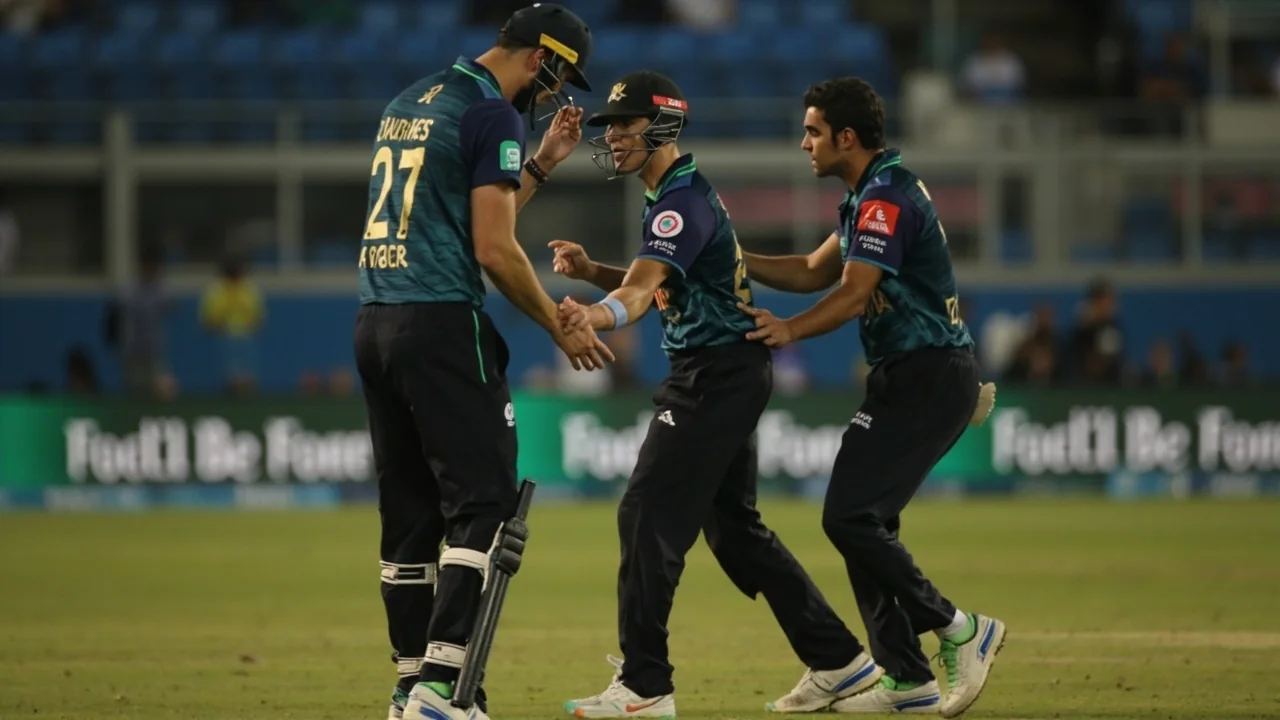
Three signals will tell readers where the format question is heading. The first is whether the ICC publishes a working paper between now and the Hong Kong meeting that explicitly models a 12-team draw. The second is whether the Associate-nation members coordinate a joint position before the FTP ratification vote. The third is whether the co-hosts — South Africa, Zimbabwe and Namibia — make any public comment about the format change, particularly Namibia, which has the most direct exposure to a smaller qualifier.
Beyond those three signals, the next useful reading moment is the FTP announcement itself. That document will set the bilateral calendar for the 2027–2031 cycle, and the World Cup format will be locked inside it. Until then, the Edinburgh discussion is the clearest public evidence the ICC has weighed a smaller field and not yet decided against it.
The frame this story leaves for cricket readers
Retrospectively, the Edinburgh meetings are not a decision. They are an early-cycle leak of a number the ICC had previously left on the table and was thought to have retired. The 2021 plan was 14 teams; the discussion in mid-July was whether 12 is worth the savings it might generate. Associate members pushed back in public terms. The co-hosts are watching the qualifying maths. India, as the game's largest commercial market, has the most to lose from a smaller event but is also the country least likely to be locked out of it.
For readers following the men's ODI World Cup story through the rest of 2026, the working assumption should be that the FTP decision in Hong Kong will land as the moment of truth. The Edinburgh conversation has put 12 teams on the table; the FTP will either confirm it or close it. Either outcome will reshape the calendar, the qualifying pathway, and the kind of cricket Indian fantasy readers can plan for from 4 October 2027 onwards. For ongoing coverage of squad signals, format decisions and the next FTP checkpoints, the CricBaba cricket news desk will keep updating the frame as new numbers emerge.
The cleanest forecast at this stage is that nothing changes until Hong Kong meets. What readers should expect between Edinburgh and then is more public commentary from Associate boards, a quiet round of bilateral planning from full members, and at least one further ICC working paper before the FTP vote. The 2027 men's ODI World Cup is two years and four months away from its first scheduled ball, and the size of its field is still, technically, an open question.