SUL-W vs MSG-W Fantasy Cricket Read: English Women's 100 League Match 10 at Headingley, 28 July 2026
Sunrisers Leeds Women and Manchester Super Giants Women walked out at Headingley on 28 July 2026 with two consecutive wins and an unbeaten record respectively, setting up the tenth fixture of the English Women's 100 League 2026 as a table-top test for fantasy selectors.
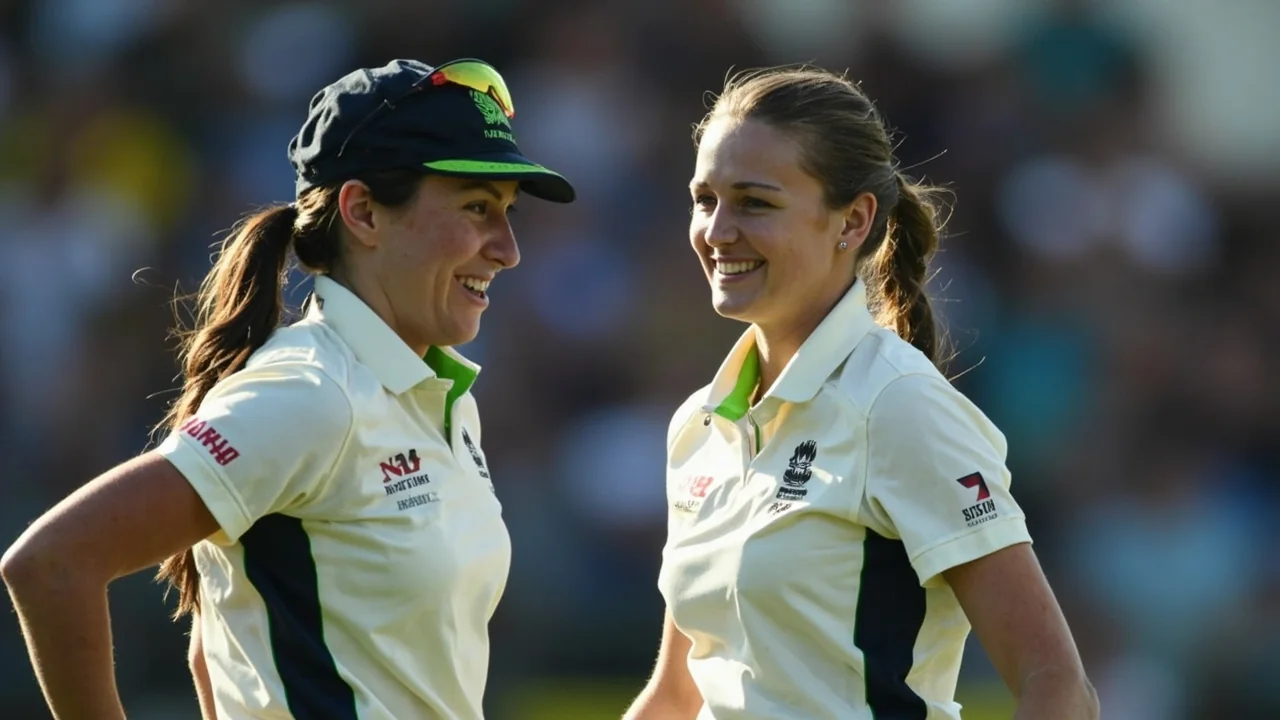
Reading a fantasy cricket prediction in retrospect is the cleanest way to test the method behind it. Match 10 of the English Women's 100 League 2026, between Sunrisers Leeds Women (SUL-W) and Manchester Super Giants Women (MSG-W), was scheduled for a 7:30 PM IST start at Headingley on Tuesday, 28 July 2026, and the pre-match read published the same day gave fantasy selectors a complete snapshot: form lines, both predicted XIs, head-to-head numbers, pitch notes, captain options and a match-winner call. Eight days on, this is what that snapshot looked like and what an Indian fantasy reader can take from the way the prediction was put together.
Form was the cleanest input. Sunrisers Leeds Women came into the fixture with two wins from their first two outings, on top of the early Hundred Women's table, and arrived off a victory over Southern Brave Women. The batting backbone the prediction named was Annabel Sutherland, Phoebe Litchfield and Danielle Gibson; the bowling load was carried by Cassidy McCarthy, Jess Jonassen and Deepti Sharma. Manchester Super Giants Women sat one place behind with one win and one no result, unbeaten but a step behind on net run-rate. Both teams had reasons to play for table position. In fantasy cricket, that contrast — one side defending a lead, the other chasing it down — usually shapes the toss decision more than anything in the XI list, and the prediction had to price that in before a single credit was spent.
Fixture reference frame
- Match
- Match 10, English Women's 100 League 2026
- Teams
- Sunrisers Leeds Women vs Manchester Super Giants Women
- Date
- Tuesday, 28 July 2026
- Start
- 7:30 PM IST
- Venue
- Headingley, Leeds
- Head-to-head
- Sunrisers Leeds Women 4 wins, Manchester Super Giants Women 1 win
- SUL-W form
- Two wins from two (off a victory over Southern Brave Women)
- MSG-W form
- One win, one no result, unbeaten
- Temperature
- 19°C, partly cloudy
- Surface
- Batting-friendly, best suited to pace
- First-innings average
- 133
- Chasing record
- Chasing sides won 53% of matches
- Source
- Cricket Addictor (republished via Dailyhunt), 28 July 2026
How the predicted XIs were built before the toss
The predicted Sunrisers Leeds Women XI was Bryony Smith, Jess Jonassen, Phoebe Litchfield, Annabel Sutherland, Lauren Winfield-Hill (wk), Danielle Gibson, Deepti Sharma, Darcey Carter, Sophia Turner, Cassidy McCarthy and Hannah Baker. The structure was a top-order built around Litchfield and Sutherland, an all-round middle with Gibson and Deepti Sharma, and a bowling group led by McCarthy and Jonassen. From a fantasy angle, the pickable credits concentrated around three roles: an anchor batsman (Smith, Litchfield, Winfield-Hill), an all-rounder who contributes in both departments (Sutherland, Gibson, Deepti Sharma) and a pace-led bowling attack that would get the most out of the Headingley surface.
The predicted Manchester Super Giants Women XI was Meg Lanning (c), Smriti Mandhana, Grace Scrivens, Paige Scholfield, Richa Ghosh (wk), Mady Villiers, Kathryn Bryce, Maitlan Brown, Ryana MacDonald-Gay, Sophie Ecclestone and Grace Ballinger. The shape was top-heavy — Lanning, Mandhana, Scrivens, Scholfield — with Ecclestone as the spin anchor and MacDonald-Gay as the pace spear. For fantasy selectors, the MSG-W pool split into three credit tiers: the Lanning-Mandhana-Ghosh top order at premium credits, Ecclestone at slightly discounted rate as the lone specialist spinner, and a value middle in Villiers and Bryce.
Predicted SUL-W XI
- Bryony Smith
- Jess Jonassen
- Phoebe Litchfield
- Annabel Sutherland
- Lauren Winfield-Hill (wk)
- Danielle Gibson
- Deepti Sharma
- Darcey Carter
- Sophia Turner
- Cassidy McCarthy
- Hannah Baker
Predicted MSG-W XI
- Meg Lanning (c)
- Smriti Mandhana
- Grace Scrivens
- Paige Scholfield
- Richa Ghosh (wk)
- Mady Villiers
- Kathryn Bryce
- Maitlan Brown
- Ryana MacDonald-Gay
- Sophie Ecclestone
- Grace Ballinger
The pitch read at Headingley and what it did to captain math
Headingley in late July behaves like most English summer grounds under floodlights: a surface that rewards batsmen who work the ball into the gaps, a bounce that pace bowlers can extract early, and enough lateral movement in the first six overs to keep openers honest. The pre-match notes set the temperature at 19°C with partly cloudy skies, called the surface batting-friendly, and tagged it as best suited to pace. The first-innings average at the ground was 133 in the conditions cited, and chasing teams had won 53% of games on similar surfaces. For fantasy selectors, those three numbers — the average score, the chasing record, and the pace tag — did almost all the work.
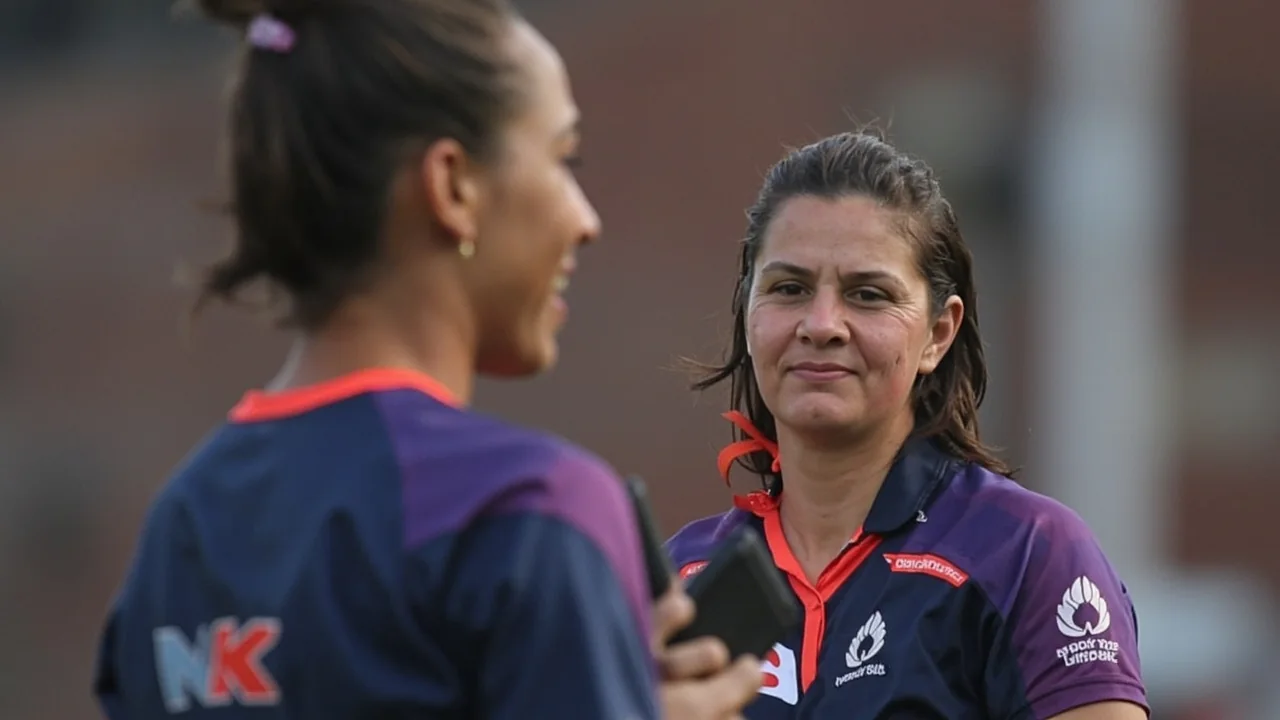
The chasing record was the first branch. When more than half the games at a venue are won by the side batting second, the smart play is to pick a fantasy XI that loads on the second-innings batting unit and the bowlers who hold back at the death. At Headingley, that translated into weight on the Sunrisers Leeds chase — Sutherland, Litchfield, Deepti Sharma as crossover contributors — and a captain pick from the MSG-W bowling attack, where death-over credit is harder to source than top-order batting. The pace tag did the rest: MacDonald-Gay and McCarthy over a spin-led captain, Ecclestone as the value pick for middle-overs wicket-taking rather than for ceiling upside.
Where the captain and vice-captain picks landed
The prediction named Smriti Mandhana and Phoebe Litchfield as the two captain options, with Annabel Sutherland and Ryana MacDonald-Gay as the vice-captain candidates. Mandhana sat at the top of the MSG-W order, which on a chasing-friendly surface made her the more obvious captain. Litchfield sat one place higher than Sutherland in the SUL-W order and had the venue history that comes from being a frequent Hundred face at Headingley. The vice-captain choice was the more interesting call: Sutherland for a guaranteed role and credit efficiency, MacDonald-Gay for differential upside if the pitch stayed true to the pace tag.
Budget picks were Mady Villiers and Deepti Sharma. Both came in at the lower end of the credit curve but carried specific route-to-points arguments. Villiers was the seam-bowling all-rounder in the MSG-W middle order — a profile that has historically over-performed its salary on English surfaces when the ball moves laterally. Deepti Sharma offered a similar profile from the SUL-W side: spin option for middle overs, useful lower-order batting, and a credit cost that left room for a premium anchor. Two budget picks with distinct roles, both picked because of what the Headingley surface was expected to reward.
The combination frame: 2-3-3-3 and the players to avoid
Two full Dream11 combinations were provided in the source piece, both built around a 2-3-3-3 distribution across the wicket-keeper, batter, all-rounder and bowler slots. The 2-3-3-3 shape is itself a reading decision: it loads the XI with two wicket-keeper-batters (Winfield-Hill and Ghosh), three specialist batters (typically Smith, Litchfield and one of Mandhana or Scrivens), three all-rounders (Sutherland, Gibson, Deepti Sharma or Villiers, Bryce, Scholfield depending on side balance) and three bowlers (Jonassen, McCarthy, Ecclestone as a regular core). The shape leaves budget for two premium anchor picks and four value picks in the middle.
The players flagged to avoid were Joane Gardner and Rachael Slater. Both were listed with no Dream11 credits and no points recorded at the time of the prediction, which translated into a simple message: do not pick names that have not yet featured in the credit pool, even when the squad depth suggests they might get a game. For fantasy selectors, that is the kind of guardrail the Hundred slate forces on users more often than longer-form leagues do, because squad turnover is high and squad-list credits do not always match the playing XI.

Reading the head-to-head, form and match-winner call together
Head-to-head going into the match read SUL-W 4 wins, MSG-W 1 win. That is a one-sided number, but it has to be read against the sample size. Across a tournament that has existed only since 2021, the head-to-head reflects the team identities more than it does any kind of psychological edge. Sunrisers Leeds Women's identity is top-order batting depth plus a pace-led bowling group; Manchester Super Giants Women's identity is a star-studded batting unit with a developing bowling core. The head-to-head lined up with that shape. The match-winner projection in the source piece leaned Sunrisers Leeds Women on squad strength rather than venue or form alone, which is a defensible call but not a guaranteed one — the kind of read that survives an audit on the prediction sheet even if the actual match goes the other way.
What an Indian fantasy reader can take from this prediction as a method
Three things stand out when the Match 10 read is treated as a method reference rather than a result to chase. First, the captain call was shaped almost entirely by the chasing record and the pace tag, not by reputation. That is the right ordering for English white-ball fantasy: read the surface first, then the match-up, then the player. Second, the budget picks (Villiers, Deepti Sharma) were chosen because their credit cost freed the XI to take premium captain options, not because they were the best players on the day. Fantasy cricket rewards that budget discipline more than it rewards the obvious star pick. Third, the players-to-avoid list is just as important as the captain list. Joane Gardner and Rachael Slater were flagged not because they were bad cricketers but because the prediction could not price them at zero credits without inventing data. The same guardrail applies across the broader fantasy cricket desk at CricBaba: do not pick names the platform has not yet scored.
The retrospective frame matters here. This read was written the day of the match, not the day after, and it represents the kind of pre-toss thinking that a fantasy selector would have carried into a contest. The job of an editorial desk is not to second-guess the result but to test whether the prediction's inputs were sound and the math was reasonable. On both counts, the Match 10 read held up as a model for how to price a Hundred Women's fixture: surface first, form second, head-to-head as confirmation rather than driver, captain from the chasing unit, and budget picks chosen for what they freed rather than for what they scored.
What to take into the next Hundred Women's fixture
Two practical carry-overs from this prediction still apply to any Hundred Women's fixture an Indian fantasy reader walks into. The first is the captain frame: when the venue chasing record is above 50%, build the XI to score with the bat in the second innings and load the captain on the team chasing. The second is the credit discipline: every Dream11 XI on the Hundred slate has room for one or two value picks whose job is to free credits, not to be the headline scorer. Match 10's prediction put Villiers and Deepti Sharma in that role and built the rest of the team around them. That is the cleanest working method the source piece left behind, and it is the part of the read that survives the result regardless of which side won the toss.